



ADEKOM PET Bottling Application Screw+Piston Booster Oil Free High Pressure Air Compressor



Biopharmaceuticals are an important part of the modern pharmaceutical industry, combining biotechnology, medicine, pharmaceutical science and bioengineering. With the continued development of biotechnology, the research and large-scale production of monoclonal antibodies, vaccines, recombinant proteins and other biologics are placing increasingly stringent demands on manufacturing environments, process control and equipment reliability.
Compressed air plays an important role in various biopharmaceutical manufacturing processes, including bioreactors, fermentation systems, pneumatic control, material handling, filtration, drying and pharmaceutical packaging. For applications where compressed air comes into direct contact with products, process media or critical production equipment, contaminants such as oil, moisture, particles and microorganisms must be controlled according to the specific process requirements to protect product quality and manufacturing integrity.
ADEKOM provides a range of oil-free compressed air solutions, including ETC catalytic conversion oil-free screw compressors, KDS dry screw oil-free compressors and KDR oil-free scroll compressors. Equipment can be selected according to the pressure, flow rate and air quality requirements of different production processes.
Compressed Air Applications in Biopharmaceutical Manufacturing
Biopharmaceutical manufacturing involves complex processes, each with different compressed air requirements. Compressed air systems must be properly designed and configured according to the intended application and the level of contact between the air and the product.
1. Fermentation and Bioreactors
Fermentation and bioreactors are essential stages in biopharmaceutical manufacturing. Certain bioprocesses require treated compressed air or oxygen to support microbial or cell culture operations.
Compressed air systems can support gas supply, valve operation and auxiliary equipment. For gases introduced directly into bioreactors or brought into contact with culture media, appropriate sterile filtration, drying and pressure control measures are generally required according to process specifications.
A stable air supply with consistent pressure and flow helps maintain process conditions and supports reliable production.
2. Pneumatic Control and Automation
Modern biopharmaceutical facilities rely heavily on automated production systems, including pneumatic valves, actuators, instrumentation and automated equipment.
Compressed air provides the power and control medium for these devices. Its stability directly affects equipment response, control accuracy and overall production reliability.
ADEKOM oil-free compressors can be selected according to system demand, operating pressure and load profile to provide a stable compressed air supply for production equipment and pneumatic automation systems.
3. Filtration, Drying and Material Handling
Compressed air is used in various pharmaceutical production processes, including filtration equipment, drying systems, pneumatic conveying devices and auxiliary process machinery.
For applications involving direct contact with pharmaceutical products or process media, compressed air quality must be controlled according to the requirements for particles, moisture and oil content.
By combining suitable compressors with air dryers, filters and properly designed piping systems, manufacturers can establish a compressed air supply that meets their specific process requirements.
4. Aseptic Filling and Pharmaceutical Packaging
Aseptic filling and packaging are important stages in biopharmaceutical production. Compressed air is used to operate pneumatic equipment, automated actuators, packaging machinery and other auxiliary systems.
For processes where air may come into contact with pharmaceutical products, container interiors or critical product surfaces, air quality requirements must be established through appropriate risk assessment, filtration and microbial control measures.
For pharmaceutical packaging lines using PET bottles or other plastic containers, ADEKOM KSP series screw-piston tandem oil-free compressors provide high-pressure air for bottle-blowing applications.
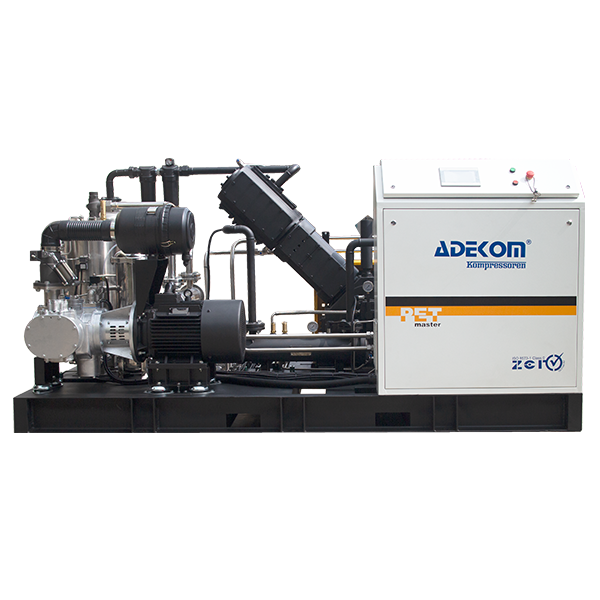

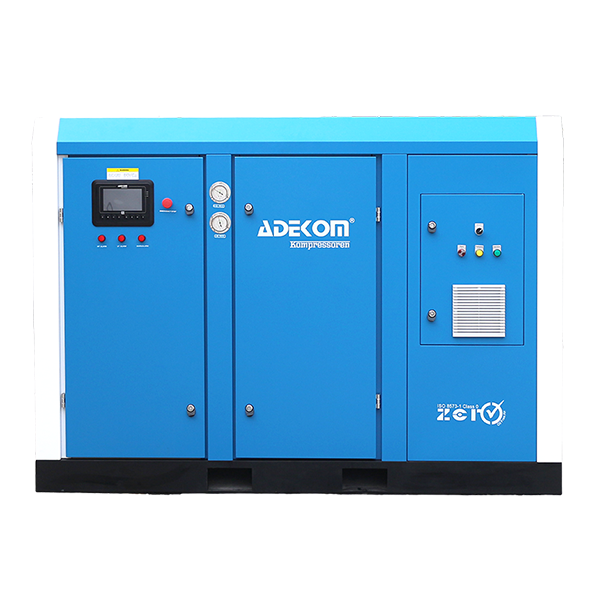
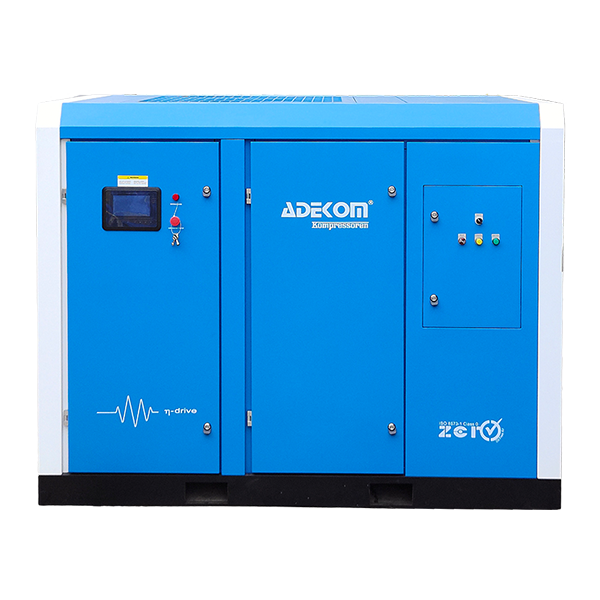
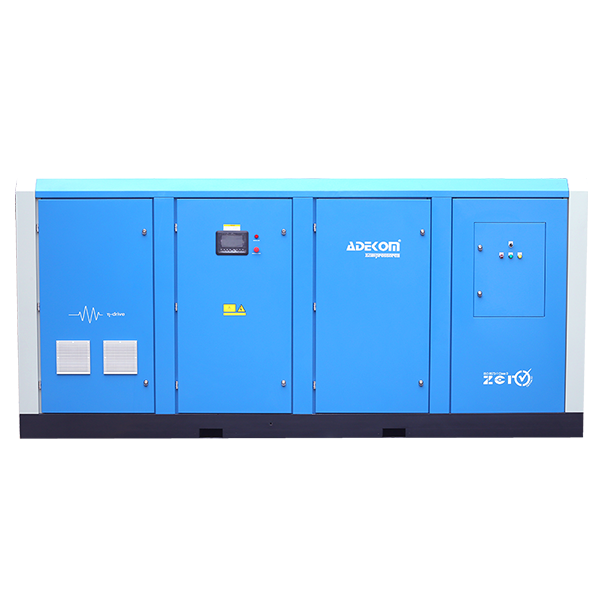
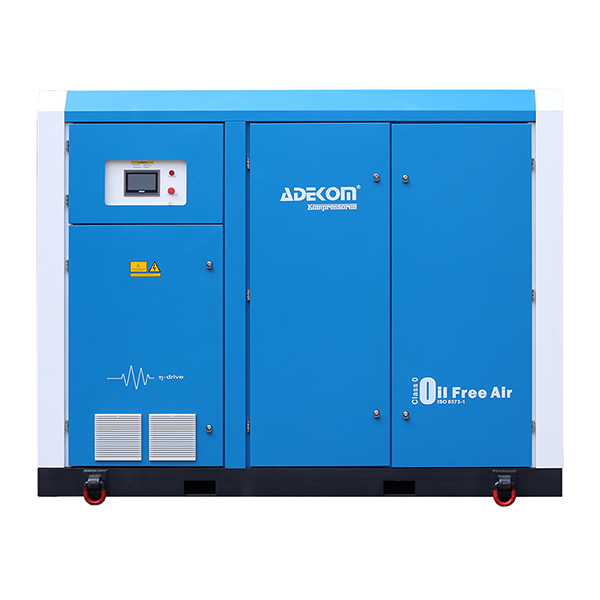
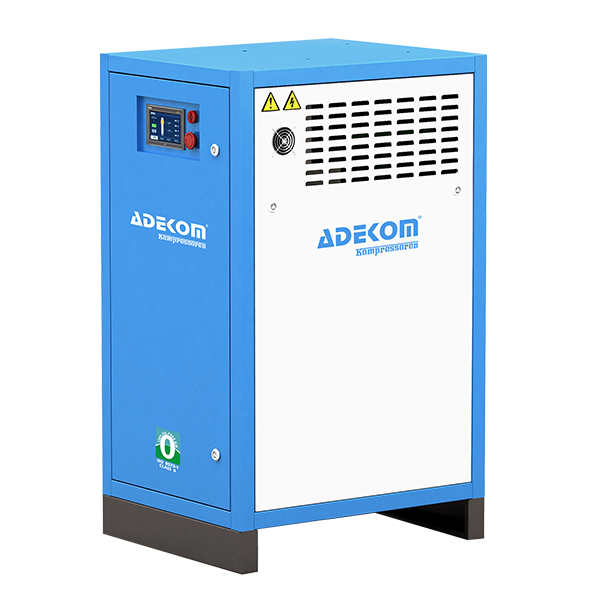

ADEKOM Oil-Free Compressor Solutions for Biopharmaceutical Applications
Different biopharmaceutical processes have specific requirements for compressed air pressure, flow rate, purity and operational stability. ADEKOM offers several oil-free compression technologies to address different production needs.
1. ET/ETC Series Catalytic Conversion Oil-Free Screw Compressors
ADEKOM ET/ETC series compressors combine screw compression technology with an ETC catalytic conversion system. Through catalytic oxidation, the system treats oil-based contaminants and other hydrocarbons in compressed air.
The catalytic process converts applicable oil and hydrocarbon contaminants into water and carbon dioxide, helping reduce the risk of oil contamination. Depending on the specific configuration and test results, the system can meet applicable oil-content classes under ISO 8573-1.
Key Features:
Key Features:
ADEKOM KSP series compressors combine first-stage oil-free screw compression with second-stage oil-free piston boosting to provide high-pressure oil-free compressed air for PET bottle-blowing applications.
In the biopharmaceutical industry, this technology can support pharmaceutical packaging lines using PET plastic containers. Appropriate air treatment and filtration systems can be configured according to the pressure, flow rate and air quality requirements of the bottle-blowing process.
Key Features:
Oil Content Control
Compressors should be selected according to the process risk and the intended contact between compressed air and the product. ISO 8573-1 Class 0 specifies an oil content classification, with its applicable limits determined by the relevant standard and certification documentation.
Particulate Control
Solid particles in compressed air may originate from the intake environment, piping, air receivers and equipment components. Appropriate filtration stages can help reduce particulate contamination to the required level.
Moisture Control
Moisture in compressed air can affect pneumatic equipment, piping and manufacturing processes. Refrigerated or desiccant air dryers should be selected according to the required pressure dew point and process conditions.
Microbial Control
For compressed air that directly contacts products, culture media or critical process materials, appropriate sterile filtration and validation measures should be implemented based on a process risk assessment. Oil-free compression technology alone does not guarantee sterile air.
System Stability and Operational Reliability
Biopharmaceutical manufacturing generally requires stable equipment operation and controlled process conditions. Compressor capacity, standby arrangements, air receivers, filtration and drying systems, and automatic control strategies should all be designed according to actual production requirements.
Biofármacos / Biofármacos / الأدوية البيولوجية