
In pneumatic conveying, the blower is often treated as a utility machine.
Flow rate. Pressure. Motor power. Price.
But engineers who operate real conveying systems know that the blower is much more than an air source.
It directly affects:
conveying stability
energy consumption
product purity
pipe blockage risk
noise level
system reliability
long-term operating cost
For many powder, granule and bulk material handling applications, the question is no longer simply:
“Can this blower deliver enough air?”
The better question is:
“Can this blower deliver clean, stable and energy-efficient process air for my conveying system?”
This is where oil-free screw blower technology becomes increasingly relevant.
1. Pneumatic conveying needs stable process air — not just more air
In a conveying line, more air is not always better.
Excessive air velocity may lead to product degradation, pipe wear, higher dust load and unnecessary energy consumption.
Insufficient or unstable air supply may cause material settlement, unstable feeding, pressure fluctuation or even pipeline blockage.
A good blower for pneumatic conveying should therefore provide:
stable airflow, suitable pressure, low pulsation, clean air and efficient operation.
Oil-free screw blowers are designed for this type of low-pressure industrial process air duty.
2. Oil-free air is not a luxury — it is process protection
In many applications, conveying air comes into direct contact with the material.
This is especially important for:
food powders
PET resin
plastic pellets
lithium battery materials
chemical powders
cement and fly ash
pharmaceutical or high-value specialty materials
Any oil carryover risk may affect product quality, contaminate the conveying line, increase cleaning work or create customer complaints.
For sensitive materials, oil-free air is not just an environmental feature.
It is a process safety requirement.
3. Energy cost matters more than purchase price
For a blower running 16–24 hours per day, the initial purchase price is only one part of the story.
The real cost is often hidden in electricity consumption.
Even a small efficiency difference can become significant after thousands of operating hours per year.
That is why many plant operators and system integrators are paying more attention to blower lifecycle cost, not only equipment price.
Oil-free screw blower technology can help reduce energy loss through efficient internal compression, especially in continuous low-pressure applications such as pneumatic conveying.
4. Stable airflow helps the whole conveying system run better
Pneumatic conveying is a system.
The blower affects the rotary valve, pipeline pressure, material-to-air ratio, filter load, silo pressure and final product flow.
Unstable airflow may create problems that look like “material issues” or “system design issues”, while the root cause may actually be poor air supply control.
A properly selected oil-free screw blower can help improve:
conveying consistency
pressure stability
feeding reliability
system automation
plant operating confidence
For operators, this means fewer interruptions and less troubleshooting.
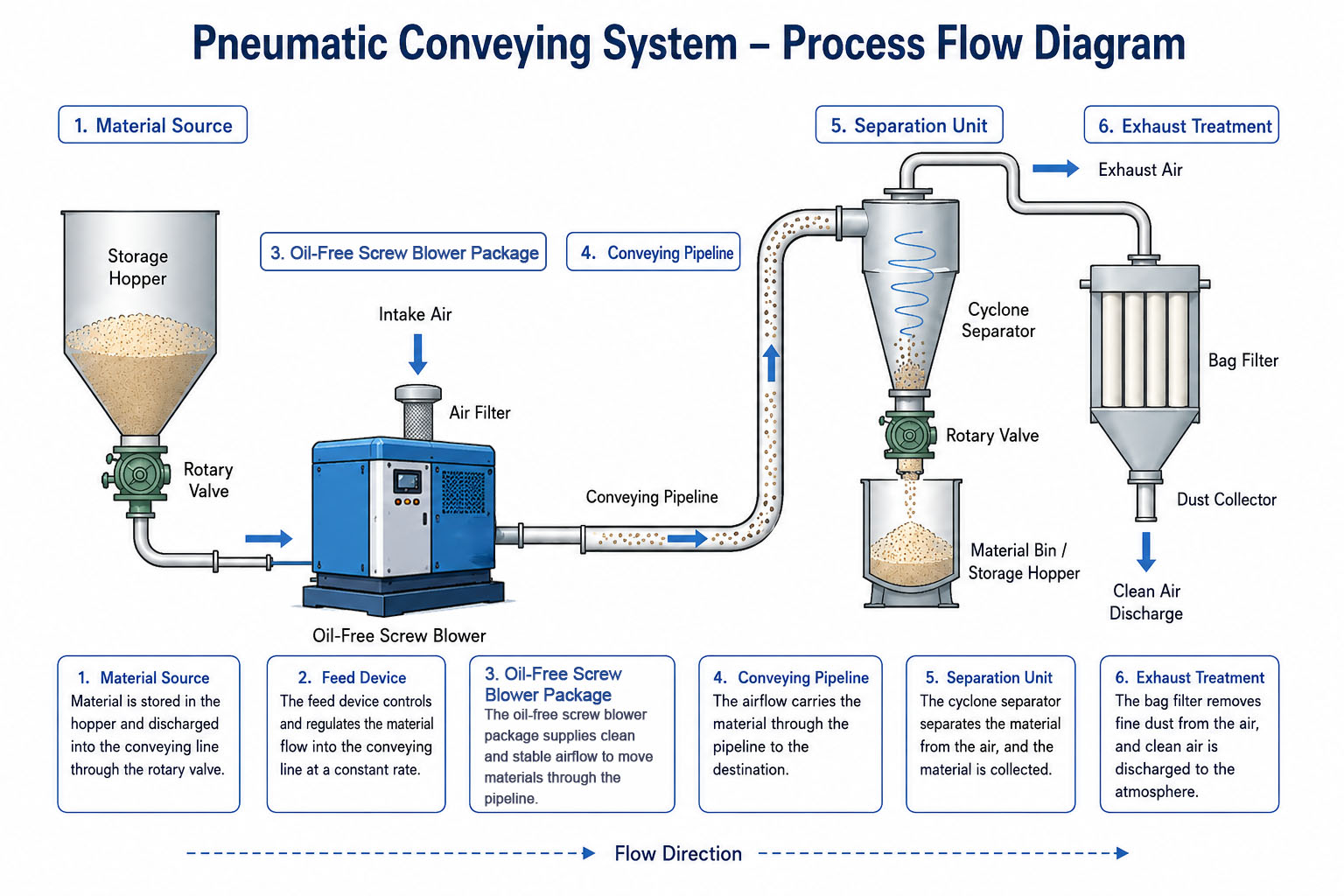
5. The right blower package reduces project risk
A blower is not only an airend.
For industrial pneumatic conveying, the complete package matters:
inlet filtration
silencing
cooling design
pressure and temperature monitoring
VFD control
safety valve
check valve
acoustic enclosure
PLC or local control logic
maintenance access
A well-engineered blower package helps reduce installation risk, commissioning time and unexpected site modifications.
This is especially important for EPC contractors, system integrators and overseas projects.
6. Where oil-free screw blowers fit well
Oil-free screw blowers are particularly suitable for applications where customers care about energy efficiency, clean air and stable operation, such as:
PET resin conveying
food powder conveying
lithium battery material transfer
cement and fly ash conveying
dry bulk handling
pneumatic unloading
chemical powder transfer
process air supply for continuous production lines
In these applications, the blower should not be selected only by pressure and flow.
It should be selected according to the real process requirement.
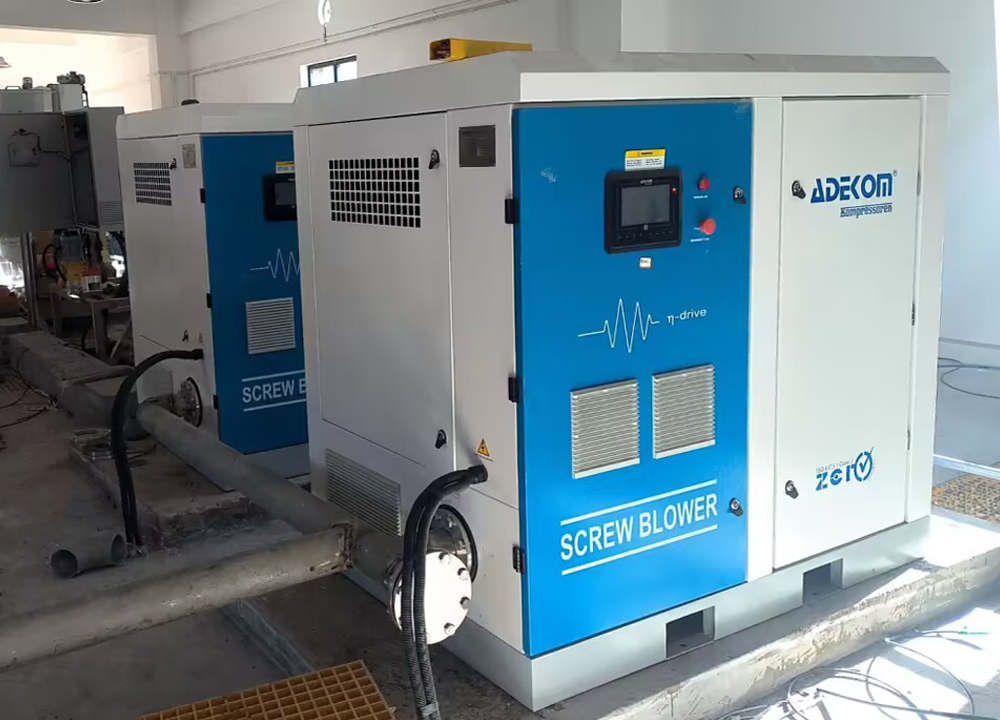
ADEKOM’s focus
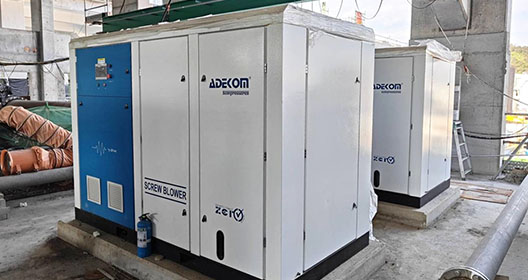
ADEKOM oil-free screw blowers are developed for industrial users who need more than basic air supply.
Our focus is to support pneumatic conveying and process air applications with:
oil-free air
stable airflow
energy-efficient operation
reliable package design
application-oriented engineering support
For plant owners, EPC contractors and pneumatic conveying system integrators, the right blower can make the whole system more stable, cleaner and more cost-effective.
Because in pneumatic conveying, air is not just air.
It is part of the process.
And better process air leads to better production.