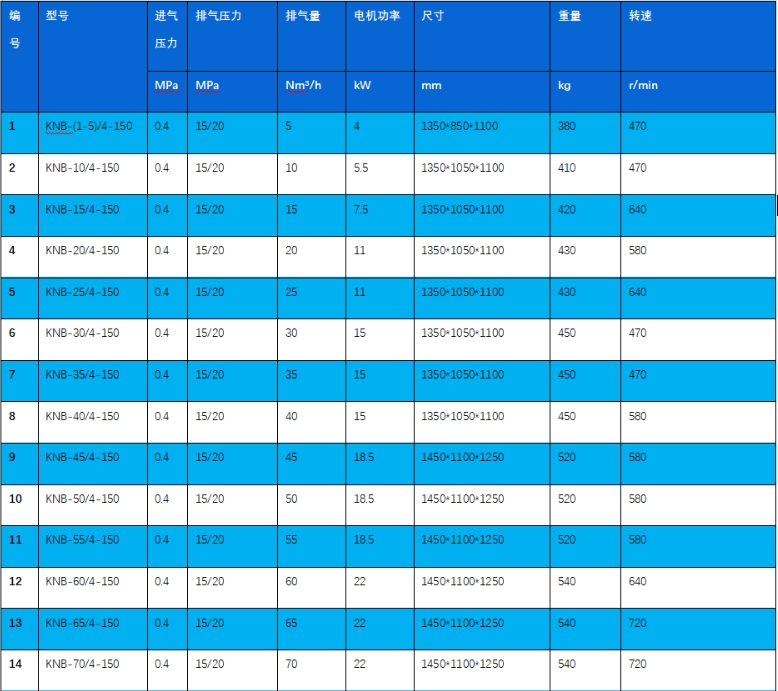


ADEKOM offers a range of industrial air compression and blower technologies to meet different material conveying processes and operating conditions.
Multiple Equipment Options: Oil-free screw blowers, low-pressure screw compressors, industrial rotary screw compressors and air treatment equipment.
Oil-Free Compression Technology: Solutions designed for applications requiring control of oil-related contamination in conveying air.
Variable-Speed Control: Adjustable operation according to actual airflow demand and changing load conditions.
Stable Operation: Screw compression technology provides continuous and stable airflow for industrial conveying systems.
Integrated Air Treatment: Compatible configurations with refrigerated dryers, desiccant dryers and precision filters.
Experience Across Industries: Equipment solutions for food processing, chemicals, plastics, building materials, metallurgy and environmental engineering.
Looking for a suitable blower or compressed air system for powder and bulk material conveying?
Contact ADEKOM with your material characteristics, conveying distance, required conveying capacity, operating pressure and site conditions. Our team can help evaluate a suitable blower or compressor configuration for your application.
Frequently Asked Questions
1. What is pneumatic conveying?
Pneumatic conveying is a material handling technology that uses compressed air or other gases to transport powders and granular materials through enclosed pipelines. It is widely used in food processing, chemicals, plastics, building materials and metallurgy.
2. What is the difference between dilute-phase and dense-phase conveying?
Dilute-phase conveying generally uses higher air velocities to keep materials suspended in the pipeline, while dense-phase conveying operates with lower conveying velocities and higher solids-to-air ratios, moving materials at a higher concentration or in plugs. The appropriate method depends on material properties, conveying distance and process requirements.
3. Should I use a blower or an air compressor for pneumatic conveying?
The choice depends on the required operating pressure and airflow. Low-pressure pneumatic conveying applications can often be evaluated for screw blowers, while higher-pressure conveying systems may require screw air compressors or other suitable compressor configurations.
4. What applications are suitable for KGF oil-free screw blowers?
The KGF Series is suitable for various low-pressure pneumatic conveying applications, including the handling of food powders, chemical materials, building material powders and other industrial bulk solids. Final suitability depends on material characteristics, conveying method, required airflow and system pressure.
5. What are the advantages of oil-free screw blowers over conventional Roots blowers?
Oil-free screw blowers use an internal compression process to deliver relatively continuous and stable airflow. Combined with variable-speed drive technology, they can adjust output according to air demand. Under suitable operating conditions, they also offer the potential to reduce energy consumption compared with conventional Roots blowers.
6. Is an air dryer necessary for pneumatic conveying systems?
The need for an air dryer depends on material hygroscopicity, conveying conditions and process requirements. For moisture-sensitive materials or applications where powder agglomeration must be avoided, compressed air drying should be carefully evaluated.
7. How do I determine the required airflow and pressure for pneumatic conveying?
The required airflow and pressure depend on material properties, conveying capacity, pipeline length, pipeline diameter, number of bends, vertical elevation and system pressure losses. These parameters should be evaluated together when selecting a blower or compressor.
8. Can ADEKOM provide a complete air supply system for pneumatic conveying?
ADEKOM can provide blowers, screw air compressors and supporting air treatment equipment for pneumatic conveying applications. The final supply scope can be configured according to project requirements and system design.